
Steel Structure Warehouse Cost, Design and Construction: Complete Buyer Guide 2026
Steel Structure Warehouse Cost, Design and Construction: Complete Buyer Guide 2026
Planning a steel structure warehouse? Whether you are sourcing your first prefab steel warehouse building or expanding an existing facility, the decisions you make before placing an order — about steel warehouse design, steel warehouse cost, and steel warehouse construction sequence — determine whether your project delivers full operational value or ends up over budget and under-specified.
This guide covers every aspect of steel structure warehouse procurement in one place: what drives steel warehouse cost, how to approach steel warehouse design, what the steel warehouse construction process involves step by step, and how to select a prefab steel warehouse building supplier you can trust. By the end, you will have a clear framework for making the right decisions — before you request a single quotation.
What Is a Steel Structure Warehouse and Why Is It the Right Choice for Industrial Storage?
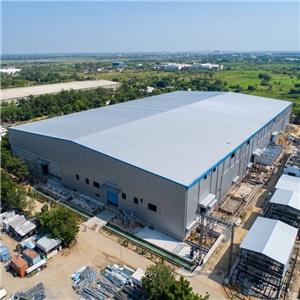
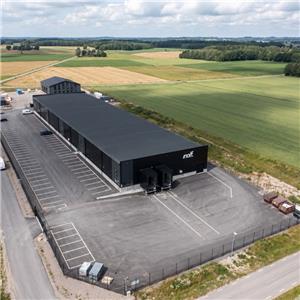
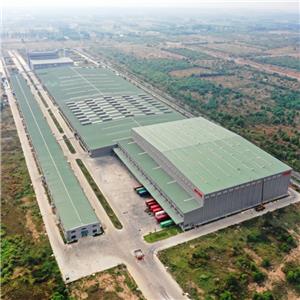
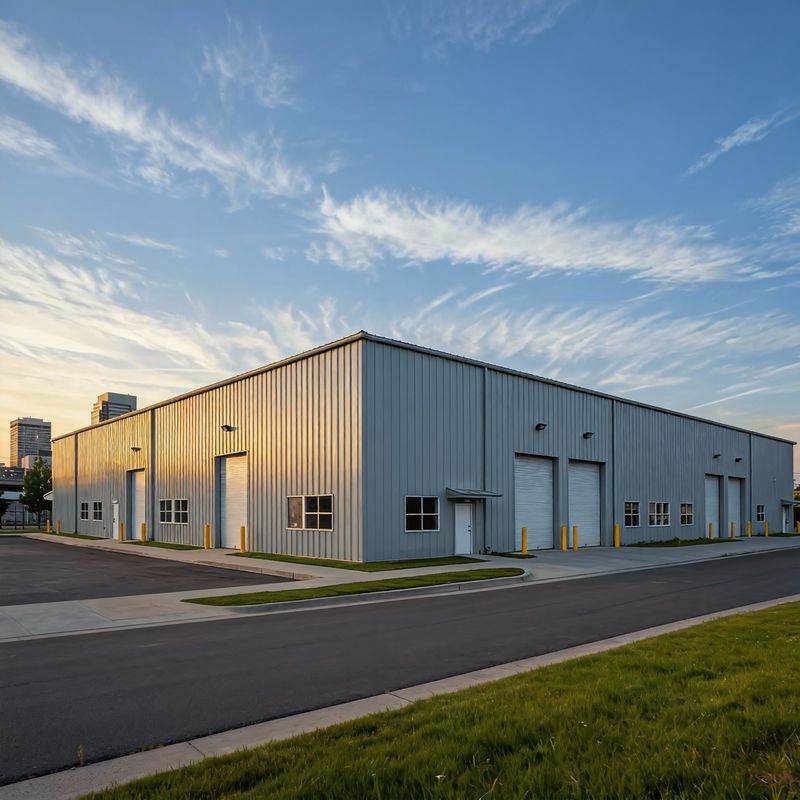
A steel structure warehouse is a pre-engineered building in which the primary structural frame — columns, rafters, and bracing — is fabricated from structural steel in a factory and assembled on site using bolted connections. The prefab steel warehouse building system allows large, column-free interior spaces to be constructed faster and more economically than any masonry or concrete alternative for single-story industrial applications.
The key advantages of a steel structure warehouse over concrete are speed of construction, clear span capability, expansion flexibility, and recyclability. A prefab steel warehouse building of 3,000 m² can be structurally complete and weathertight within 75 to 100 days of placing an order. An equivalent concrete warehouse typically takes 10 to 18 months. For businesses that need to begin operations quickly — or that have lease commencement deadlines — a prefab steel warehouse building is almost always the practical choice. A steel structure warehouse also offers significant advantages in clear span capability: a single-span steel structure warehouse can achieve 60 m of column-free interior width, compared to 20 m to 30 m for economical concrete alternatives.
| Factor | Steel Structure Warehouse | Concrete Warehouse |
|---|---|---|
| Construction speed | 75 – 120 days | 10 – 18 months |
| Max clear span (no columns) | Up to 60 m | 20 – 30 m |
| Expansion capability | Easy — add bays at gable end | Difficult — demolition required |
| Foundation load | Light — smaller footings | Heavy — larger, deeper foundations |
| Service life | 50+ years | 50+ years |
Steel Warehouse Design: 6 Parameters Every Buyer Must Define
Good steel warehouse design begins with six technical decisions. Each one has a direct and measurable effect on steel warehouse cost, structural performance, and long-term operational value. Defining all six clearly before approaching a manufacturer produces accurate, comparable quotations and prevents costly design revisions after fabrication begins.
Parameter 1: Span Width
Span is the most important single dimension in steel warehouse design. It determines the primary frame steel weight — which drives 35% to 50% of total steel warehouse cost. The most economical zone for portal frame steel warehouse design is 18 m to 36 m. Beyond 36 m, frame weight and steel warehouse cost increase rapidly because rafter sections must be much deeper to carry the load over a longer distance.
| Span | Application | Forklift Aisles | Steel Weight Index |
|---|---|---|---|
| 12 – 18 m | Small workshops, single-aisle storage | 1 | 1.0× baseline |
| 18 – 30 m | General logistics, manufacturing | 2 – 3 | 1.2 – 1.6× |
| 30 – 45 m | Large distribution, heavy industry | 3 – 5 | 1.8 – 2.5× |
| 45 – 60 m | Vehicle staging, special industrial | 5+ | 2.8 – 4.0× |
Parameter 2: Eave Height
Eave height in steel warehouse design is measured from finished floor to the top of the eave strut. For 4-level to 6-level pallet racking, a minimum of 7 m to 9 m is required. For high-bay automated systems, 12 m to 16 m is needed. Getting eave height wrong is one of the most expensive steel warehouse design mistakes — the entire frame must be re-engineered if the height changes after fabrication begins. Always calculate required eave height from your actual racking specification — not from a generic guideline.
Parameter 3: Insulation System
The insulation specification in steel warehouse design depends on climate and stored goods. Hot, dry climates (Middle East, North Africa) require 75 mm to 100 mm polyurethane sandwich panels with white reflective coatings and ridge ventilation. Hot, humid climates (West Africa, Southeast Asia) need glasswool blankets with turbo ventilators. Cold climates need 100 mm to 150 mm PU sandwich panels with full vapor barriers. Matching insulation to climate is one of the most important decisions in steel warehouse design — wrong insulation choices lead to condensation, heat damage, and energy waste that accumulate over decades. A thorough steel warehouse design brief from the buyer makes it possible for the manufacturer to specify the correct system from the start.
Parameter 4: Surface Treatment
Corrosion protection grade is a critical steel warehouse design decision for buildings near coastlines, in humid regions, or in industrial atmospheres. Inland, dry locations: epoxy primer plus PU topcoat at 175 microns. Coastal and humid locations: zinc-rich primer plus epoxy intermediate plus PU topcoat at 220+ microns. Extreme marine environments: hot-dip galvanizing at 450 g/m².
Parameter 5: Bay Length
Bay length — the center-to-center spacing between adjacent portal frames — affects purlin sizing and total frame count. For most steel warehouse design projects, 7.5 m to 9 m bay length provides the best economic balance. A good manufacturer optimizes this as part of the value-engineering process for your steel warehouse design. This optimization directly reduces unnecessary steel warehouse cost without compromising structural performance.
Parameter 6: Crane Specification
If your steel structure warehouse requires overhead lifting, define crane capacity and hook height before the steel warehouse design begins. A 10-ton crane added to a design that did not account for it adds 25% to 40% to primary frame steel cost — plus delays for structural redesign.
Steel Warehouse Cost: What Drives the Price in 2026
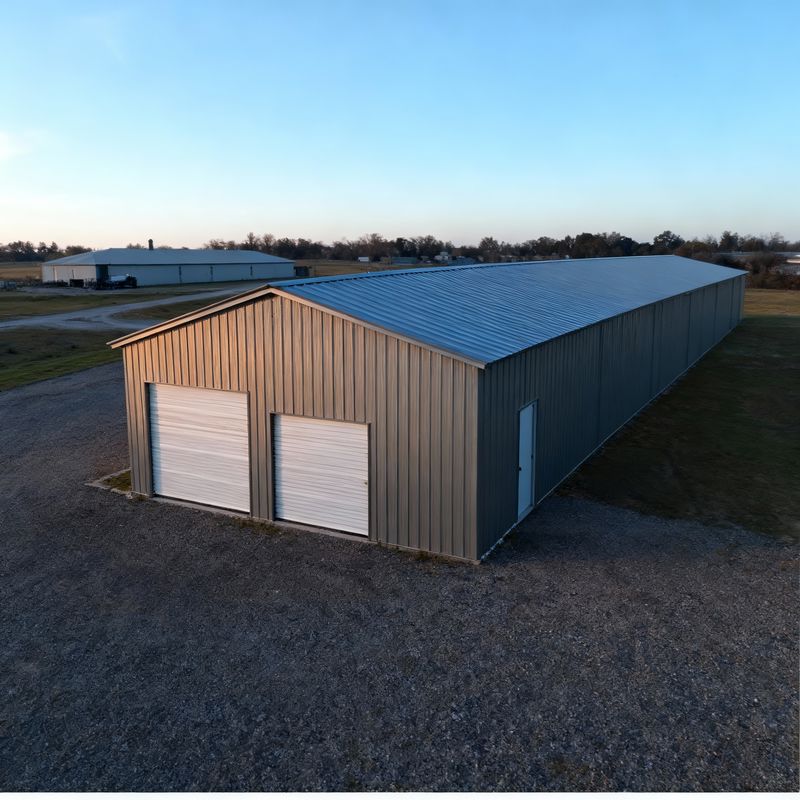
Steel warehouse cost is the most searched metric for buyers evaluating a new facility — and the most frequently misunderstood. Two prefab steel warehouse building quotations at the same price per square meter can differ by 50% or more in material quality and actual structural performance. Understanding what drives steel warehouse cost is essential for making meaningful comparisons.
Steel Warehouse Cost Breakdown by Component
| Cost Component | Share of Total Steel Warehouse Cost | Key Variables |
|---|---|---|
| Primary steel frame | 35% – 50% of steel warehouse cost | Span, height, crane loads, wind and snow zone |
| Cladding panels (roof + wall) | 20% – 35% of steel warehouse cost | Panel type, thickness, insulation core material |
| Secondary framing | 8% – 12% of steel warehouse cost | Purlin size, bay length, wall girt specification |
| Surface treatment | 5% – 12% of steel warehouse cost | Paint system grade, galvanizing |
| Doors, windows, accessories | 5% – 10% of steel warehouse cost | Door type, skylight panels, ventilation |
| Crane system (if applicable) | +10% – 25% added to steel warehouse cost | Crane capacity, runway beam span |
Reference Steel Warehouse Cost Per Square Meter
| Steel Structure Warehouse Type | Specification | Steel Warehouse Cost (USD/m²) |
|---|---|---|
| Basic storage shed | 18 m span, 5 m height, single sheet, no crane | USD 25 – 38 |
| Standard logistics warehouse | 24 m span, 8 m height, 75 mm insulation, no crane | USD 38 – 52 |
| Manufacturing workshop + crane | 30 m span, 10 m height, sandwich panels, 10 T crane | USD 55 – 72 |
| Cold storage steel structure warehouse | Any span, 150 mm PU panels, full vapor envelope | USD 70 – 110+ |
Steel warehouse cost figures above cover structural supply only. Foundation construction, erection labor, electrical installation, and civil works are additional — and vary significantly by country and site conditions.
The most common mistake buyers make with steel warehouse cost is comparing total price per m² across suppliers without verifying that specifications are equivalent. Always request the steel weight breakdown (kg/m²) as part of the quotation. A supplier who cannot provide this figure is offering an incomplete quotation — and the real steel warehouse cost may be significantly higher than quoted once correct specifications are applied.
Steel Warehouse Construction: The Full Process Step by Step
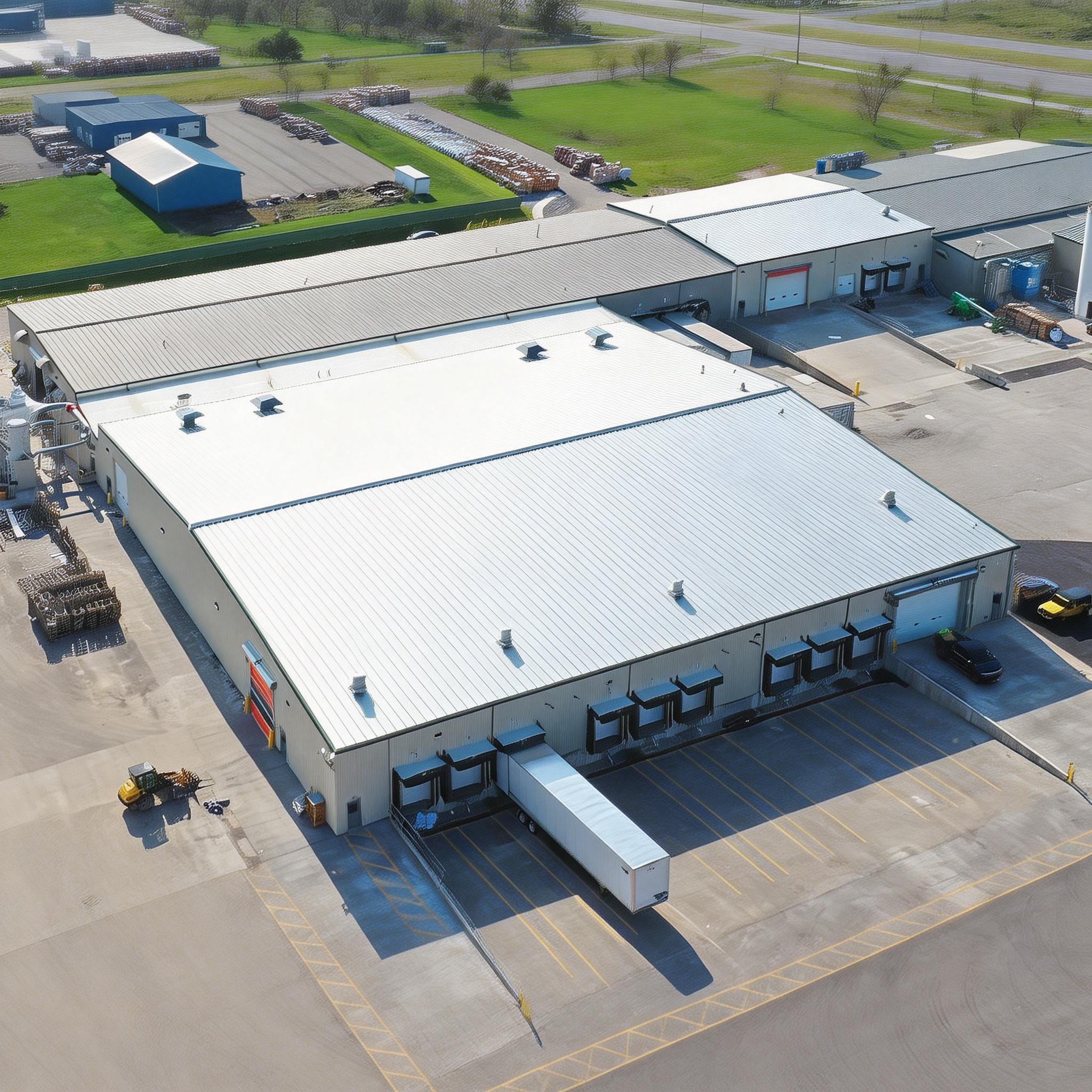
Steel warehouse construction for an international export project runs through five phases. Three of those phases can overlap — meaning that well-coordinated steel warehouse construction scheduling can compress the total timeline significantly compared to sequential execution.
| Steel Warehouse Construction Phase | Activity | Duration | Parallel? |
|---|---|---|---|
| Phase 1 — Design | Structural engineering, anchor bolt plan, drawing approval | 7 – 15 days | Must complete first |
| Phase 2 — Fabrication | CNC cutting, welding, shot blast, paint, pack | 20 – 40 days | Yes — with site work |
| Phase 3 — Shipping | Container loading, sea freight, port clearance | 15 – 42 days | Yes — with foundation |
| Phase 4 — Foundation | Site clearing, anchor bolts, concrete pour, curing | 14 – 30 days | Yes — during fabrication |
| Phase 5 — Erection | Frame erection, panels, doors, accessories, finishing | 14 – 40 days | After delivery |
Total steel warehouse construction schedule: 75 to 120 days for a 2,000 m² to 5,000 m² building. The critical path in steel warehouse construction is always the anchor bolt setting during foundation work. Misaligned anchor bolts discovered after concrete cures add weeks of correction work and significant additional cost to the steel warehouse construction project.
On-site steel warehouse construction erection follows a defined sequence: anchor bolt inspection and base plate leveling first, then column erection, then rafter installation with permanent bracing, then secondary framing (purlins and girts), then roof panels, then wall panels, then doors and accessories. Following this sequence ensures structural stability at every stage of the steel warehouse construction process and minimizes crane time.
How to Choose a Prefab Steel Warehouse Building Supplier
Not every prefab steel warehouse building supplier delivers the same quality. The price difference between a reliable prefab steel warehouse building manufacturer and a low-cost competitor often reflects real differences in engineering capability, fabrication standards, and export documentation — not just profit margin.
When evaluating a prefab steel warehouse building supplier, confirm four things:
Engineering documentation: A professional prefab steel warehouse building manufacturer provides complete structural calculations, fabrication drawings, and an anchor bolt layout plan. These documents confirm that the steel warehouse design is structurally adequate for the specified loads.
Surface treatment process: Confirm shot blasting to Sa 2.5 cleanliness standard before painting. Confirm dry film thickness — not just paint type. These are the two points where prefab steel warehouse building quality is most commonly reduced in low-cost production. Proper surface treatment is also a critical element of steel warehouse design for coastal and high-humidity locations — a detail that separates a good steel warehouse design from one that fails prematurely.
Export experience: A prefab steel warehouse building supplier who has not previously exported to your country may produce incorrect or incomplete shipping documentation, causing customs delays and port demurrage charges. Ask specifically about their experience with steel warehouse construction export documentation for your destination country.
Project references: Request photographs of completed steel structure warehouse projects with similar specifications to yours. A prefab steel warehouse building supplier with documented project history in your region is significantly lower risk than one without.
Frequently Asked Questions
What is the most economical span for a steel structure warehouse?
The most economical portal frame span range for a steel structure warehouse is 18 m to 30 m. Within this range, steel weight and fabrication cost are optimized. The sweet spot for most logistics operations is 24 m to 27 m — wide enough for three forklift aisles with racking on both sides, without the cost premium of larger spans.
How much does a 5,000 m² steel structure warehouse cost?
A standard 5,000 m² steel structure warehouse with 24 m span, 8 m eave height, 75 mm sandwich panel insulation, and no crane has a steel structure supply cost of approximately USD 190,000 to USD 260,000 (USD 38 to USD 52 per m²). Steel warehouse cost increases significantly if wider spans, crane systems, or higher insulation specifications are required.
Can steel warehouse construction be completed faster by running phases in parallel?
Yes. The single most effective way to compress steel warehouse construction timelines is to begin foundation work immediately after the anchor bolt layout plan is issued — while factory fabrication is still in progress. Running foundation work and fabrication in parallel can save 3 to 5 weeks from the total steel warehouse construction schedule.
What is the difference between a standard and a prefab steel warehouse building?
All steel structure warehouse buildings built today use prefabricated components. The term prefab steel warehouse building specifically refers to a pre-engineered system where the structural frame is designed and fabricated as an integrated system in the factory — optimized for minimum steel weight and maximum ease of site assembly. This distinguishes it from a conventionally fabricated building where standard sections are cut and modified on site.
How long does a prefab steel warehouse building last?
A well-specified prefab steel warehouse building with appropriate surface treatment and regular maintenance has a designed structural service life of 50 years or more. Roof and wall cladding panels typically require re-coating or replacement every 15 to 25 years depending on climate and panel type.
Get Your Steel Structure Warehouse Design and Price in 3 Days — Free
At Meituo Buildings, we have supplied steel structure warehouse and prefab steel warehouse building projects across the Middle East, Africa, Southeast Asia, and Europe. Every steel warehouse design we produce is matched to the specific climate, wind and snow loads, and operational requirements of the project location.
Our steel warehouse cost estimates are based on complete engineering — not assumptions. Our steel warehouse construction documentation is designed to make erection straightforward for local contractors without specialist steel construction experience.
Tell us your building dimensions, project country, and intended use. We will provide a free steel warehouse design layout drawing, a full steel warehouse construction timeline, a complete specification sheet, and detailed steel warehouse cost breakdown — within 3 business days, at no charge. Every steel warehouse design we deliver is matched to your specific site, climate, and operational requirements.
Email: sales@meituobuildings.com
WhatsApp / Phone: +86 15910306877
Website: www.meituobuildings.com