
How to Evaluate Whether the Steel Cost of a Prefab Metal Building Is Reasonable
With the rapid development of industrial and logistics infrastructure worldwide, the prefab Metal building has become one of the most practical construction solutions. Businesses choose a prefab Metal building because it offers fast installation, flexible layouts, and strong structural performance.
However, when project owners receive quotations for a prefab Metal building, one question often arises: is the steel usage and pricing actually reasonable? Because steel is the main structural component of a prefab Metal building, the amount of steel used plays a major role in determining the final project cost.
Understanding how steel consumption is calculated can help buyers evaluate whether the price of a prefab Metal building is fair.
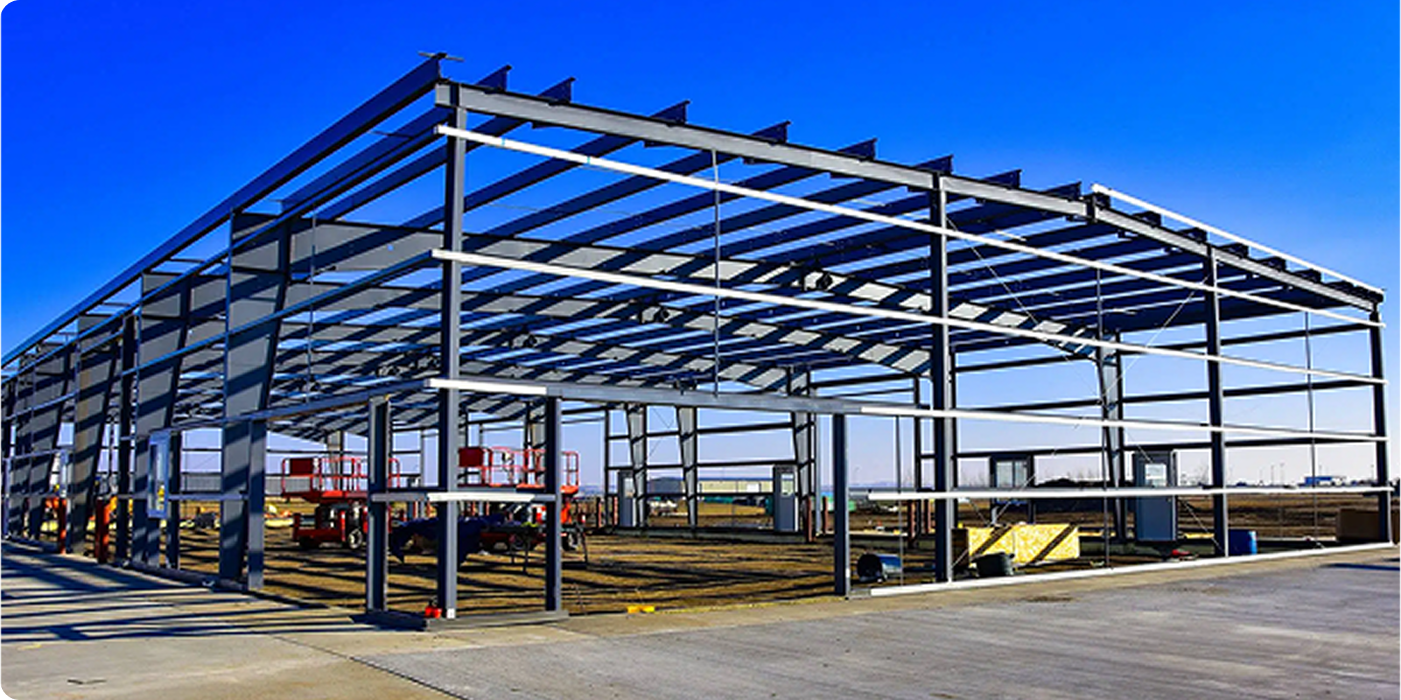
Why Steel Usage Is Critical in a Prefab Metal Building
The structural framework of a prefab Metal building is built almost entirely from steel components. Columns, beams, roof structures, and bracing systems all rely on steel to support the loads of the building.
Because of this, the quantity of steel used in a prefab Metal building directly affects both structural safety and construction cost. Too little steel may compromise safety, while excessive steel increases the overall investment in a prefab Metal building without adding real value.
A well-designed prefab Metal building achieves a balance between safety and material efficiency.
Average Steel Consumption in a Prefab Metal Building
Although each project is unique, industry experience provides general guidelines for estimating steel consumption in a prefab Metal building.
Typical ranges include:
Light-duty warehouse prefab Metal building: 25–35 kg of steel per square meter
Standard industrial prefab Metal building: 35–50 kg per square meter
Heavy-duty prefab Metal building with crane systems: 50–70 kg per square meter
These figures should be treated as reference values. The actual steel quantity in a prefab Metal building depends on several technical factors.
Factors That Influence Steel Quantity in a Prefab Metal Building
Building Span and Height
A large-span prefab Metal building requires stronger structural members to maintain stability. As the span increases, beams and columns must carry greater loads, which naturally increases steel consumption.
Similarly, taller prefab Metal building structures require additional reinforcement to ensure structural safety.
Structural Load Requirements
The intended use of the prefab Metal building also affects steel demand. A storage warehouse with light loads requires less steel than a manufacturing facility equipped with heavy machinery or overhead cranes.
Therefore, steel usage varies depending on the operational requirements of the prefab Metal building.
Environmental and Design Conditions
Climate and location also influence the design of a prefab Metal building. Regions with strong winds, heavy snow, or seismic risks require stronger structural members to meet safety regulations.
As a result, the steel quantity in a prefab Metal building may increase to meet engineering standards.
Warning Signs of an Unreasonable Prefab Metal Building Quote
When evaluating a prefab Metal building quotation, buyers should pay attention to steel consumption levels.
If the steel usage appears significantly lower than industry norms, the prefab Metal building may be under-designed. This could result in structural risks or compliance problems.
On the other hand, if the steel usage is unusually high, the prefab Metal building may be inefficiently designed, leading to unnecessary costs.
A reliable prefab Metal building supplier should be able to provide detailed structural calculations explaining how the steel quantity was determined.
Why Engineering Experience Matters
Professional engineering plays a crucial role in designing an efficient prefab Metal building. Experienced engineers can optimize the structure to reduce unnecessary steel while maintaining safety and durability.
Working with a qualified prefab Metal building manufacturer ensures that the project follows proper engineering standards and achieves cost-effective performance.