
The Steel Building Specification Items That Disappear Between Quote and Delivery
The Steel Building Specification Items That Disappear Between Quote and Delivery
Here is an uncomfortable reality about the international steel building supply market: the specification described in the quote is not always the specification that gets fabricated and shipped. I have seen the full spectrum. Suppliers who fabricate exactly what was quoted, document everything, and stand behind their product entirely. And a case where a buyer received panels with 0.35mm face sheets on an order that specified 0.5mm — a difference invisible to the eye and detectable only with a thickness gauge.
The supplier position was that the quote said sandwich panel without specifying face sheet thickness. Technically correct. Commercially indefensible. Legally ambiguous without better contract language. The steel building specification conversation is ultimately about contract language. If the steel building specification is not in the contract, the supplier has no obligation to provide it. Without it, the steel building specification is a wish list.
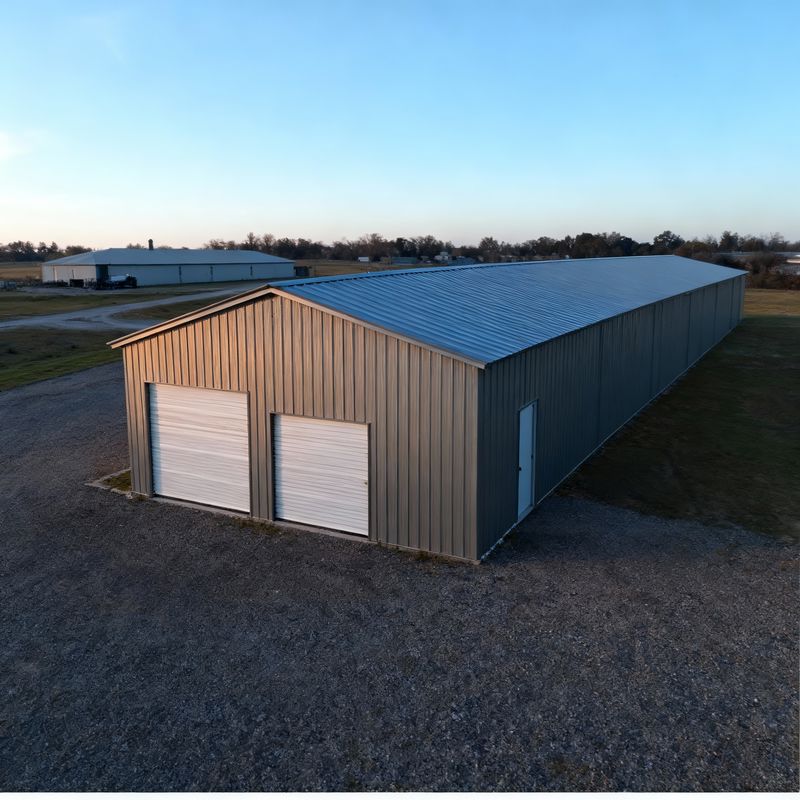
Paint dry film thickness measurement during warehouse building quality control inspection — the gauge reading confirms whether the specified 75-micron primer was applied or reduced to save cost.
The Four Specification Items That Get Changed Most Often
After reviewing hundreds of competitor quotes and supply contracts over the years, cost reductions almost always come from the same four places. Steel grade is the first steel building specification item that changes. The difference between Q235B and Q355B is not visible at any stage of fabrication, delivery, or installation. Mill certificates can be requested and should be required contractually, but the only reliable verification is third-party sampling and laboratory testing of delivered material.
Shot blasting standard is the second steel building specification item most often misrepresented. Sa 2.5 requires significantly more abrasive media, more equipment time, and better process control than Sa 1.5 or Sa 2.0. The difference in appearance between Sa 2.0 and Sa 2.5 is not obvious to the untrained eye. The paint adhesion and corrosion protection service life difference is not obvious for the first 3 to 5 years. Then it starts to become obvious.
Paint film thickness is the third steel building specification item. A 75-micron dry film thickness primer coat uses more material and takes longer to apply than a 45 to 50-micron coat. A magnetic dry film thickness gauge measures this instantly and reliably. Most buyers do not have one. Most inspectors do. This is one of the clearest arguments for third-party factory inspection on any project where surface treatment durability matters.
Panel face sheet thickness is the fourth steel building specification area of consistent discrepancy. The industry norm for roof panels on industrial buildings is 0.5mm to 0.6mm outer face. Cheaper panels use 0.4mm outer and 0.35mm inner. The cost saving at the factory is real. The impact on dent resistance and long-term performance is also real but does not manifest for years.
How to Write Contract Language That Actually Protects You
The solution is specific steel building contract terms. Sandwich panel insulation as a line item is not a specification. 75mm PU sandwich panel, outer face 0.5mm PPGI Grade 550, inner face 0.4mm PPGI, core density minimum 38 kg per cubic meter — that is a specification. Similarly, structural steel is not a specification. Q355B structural steel, primary frame members, mill certificates required for each heat — that is a specification.
The prefab building supply contract should list every material specification in the scope of supply, reference the inspection standards that will be used to verify compliance, and state the remedies available to the buyer if non-compliant materials are identified. Without the remedies clause, a specification discrepancy at delivery creates an argument. With it, a specification discrepancy creates a contractual obligation. See Steel Structure Warehouse options with complete specification documentation.
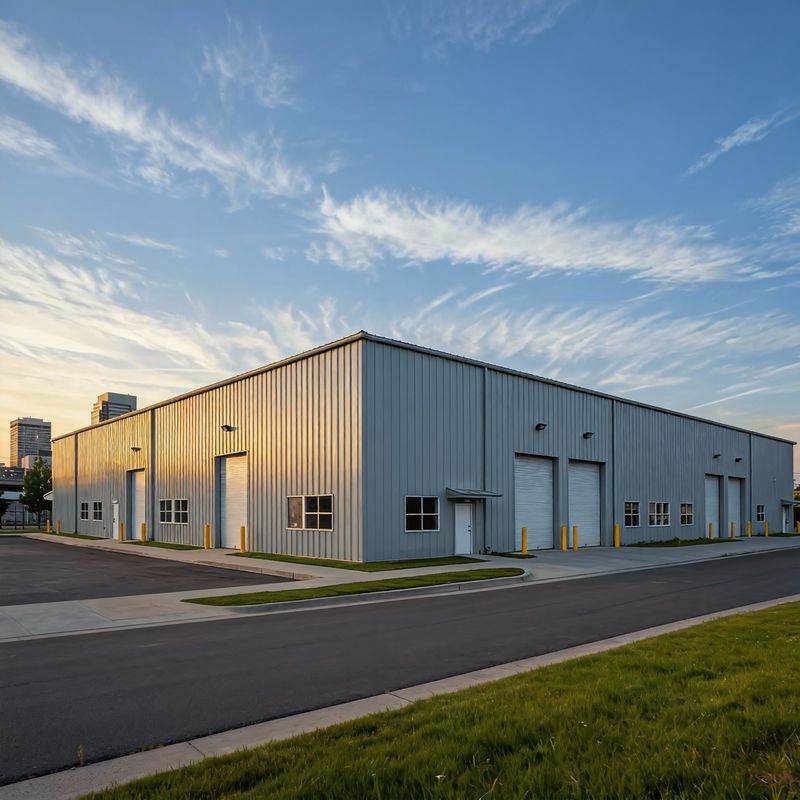
Steel structure delivery inspection — the moment to identify missing or damaged components is when the delivery truck is still present, not days later.
Factory Inspection: The Verification That Actually Works
Third-party warehouse building quality control inspection at the manufacturer factory before shipment is the most reliable protection against specification drift. A qualified inspector with a magnetic film thickness gauge, a calibrated steel thickness tester, and access to mill certificates can verify material grade, surface treatment standard, panel specification, and fabrication dimensional accuracy within one or two days.
The cost is typically USD 1,500 to USD 4,000 for a medium-sized project. On a USD 120,000 supply contract that is 1.25 to 3.3 percent of contract value. Suppliers who know a third-party inspector is coming have a strong incentive to fabricate to steel building specification rather than to manage post-delivery disputes. The third-party inspection does not guarantee perfection but significantly raises the probability that what was quoted is what gets shipped.
Practical Questions
How do I find a qualified third-party inspector for a Chinese steel building manufacturer?
SGS, Bureau Veritas, and Intertek all offer factory inspection services in China. For smaller projects, independent structural engineering consultants with Chinese operations can also provide inspection. The inspection scope should define which items will be checked, which test methods will be used, and what documentation will appear in the inspection report.
What should I check at delivery if I could not do a factory inspection?
At minimum: check all component marks against the manufacturers numbered packing list before the truck leaves the site. Use a magnetic thickness gauge to sample-check paint film thickness on a selection of primary frame members. Photograph and document any visible surface defects or coating failures before signing the delivery receipt. The steel structure delivery inspection checklist from Meituo Buildings covers these items in detail.
Contact Meituo Buildings
Meituo Buildings supports third-party factory inspection on all projects where buyers request it. The steel building specification for every order is documented in the supply contract, and mill certificates are provided as standard for all primary structural steel.
Email: sales@meituobuildings.com
WhatsApp: +86 15910306877