
Steel Building Roof Insulation: How to Stop Heat and Condensation in Industrial Buildings
Steel Building Roof Insulation: How to Stop Heat and Condensation in Industrial Buildings
Steel building roof insulation is the single most impactful thermal upgrade available for any industrial warehouse or factory.
An uninsulated steel roof allows solar heat to radiate into the building interior throughout the day, raising internal temperatures to levels that damage temperature-sensitive goods, exhaust workers, and dramatically increase the energy load on any mechanical cooling system.
The correct steel building roof insulation specification reduces peak internal temperatures by 12 to 18 degrees Celsius in tropical and subtropical climates — a difference that transforms an operationally marginal facility into a productive one.
Understanding the available metal building insulation types — their thermal performance, installation method, cost, and long-term durability — allows buyers to select the right system at the design stage. Retrofitting industrial roof insulation after construction is significantly more expensive and disruptive than specifying the correct system from the start.
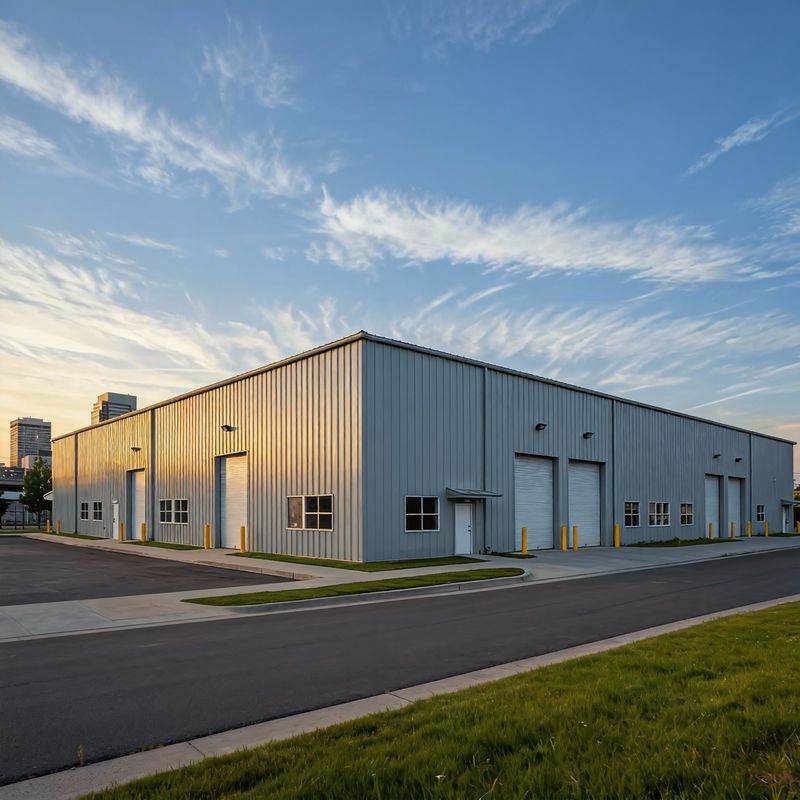
Steel building roof insulation using polyurethane sandwich panels — factory-bonded insulation core eliminates thermal bridges and provides the highest thermal resistance per unit of thickness.
Metal Building Insulation Types: The Four Main Systems
Four metal building insulation types serve the majority of industrial building applications. Each delivers different thermal performance (R-value) and requires a different installation method.
1. Sandwich Panel Roof Systems
The sandwich panel roof system is the premium choice for modern industrial facilities. It consists of a rigid insulation core (polyurethane, PIR, or rockwool) factory-bonded between two steel skins. This system provides high R-values, excellent fire performance, and rapid installation. Most importantly, the rigid core prevents the insulation from compressing at the purlins, which eliminates the thermal bridges common in blanket systems.
2. Glasswool Blanket Insulation
Glasswool blanket is the most common industrial roof insulation due to its low initial material cost. It is installed over the purlins before the roof sheets are fastened. While effective, the R-value is reduced where the insulation is compressed between the rafter and the roof sheet. High-performing glasswool systems use "thermal blocks" (plastic spacers) to maintain insulation thickness over the purlins.
3. Double-Layer Cladding with Spacer Systems
This roof insulation steel warehouse system uses an internal steel liner sheet, a galvanized steel spacer bridge, a thick layer of uncompressed glasswool or rockwool, and then the external roof sheet. This creates a high-performance thermal envelope that can accommodate very thick insulation layers for cold storage or high-spec manufacturing plants.
4. Spray Foam (SPF) Insulation
Sprayed polyurethane foam is typically used for retrofitting steel building roof insulation in existing buildings. It is applied to the underside of the roof sheets. While it provides excellent sealing and high R-value, it is generally more expensive than pre-engineered systems and requires specialized installation crews on site.
Preventing Condensation with Industrial Roof Insulation
In addition to heat management, steel building roof insulation is essential for condensation control. When warm, humid air inside a building contacts a cold, uninsulated steel roof sheet during the night or in winter, the moisture condenses into water droplets. This "internal rain" damages stock, causes machinery to rust, and degrades the structural steel frame.
A correctly specified industrial roof insulation system keeps the internal surface of the roof above the dew point temperature, preventing condensation from forming. All blanket-type systems must be installed with a continuous, sealed vapor barrier on the warm side (typically the underside) to prevent moisture from entering the insulation material.