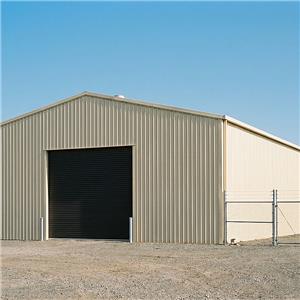
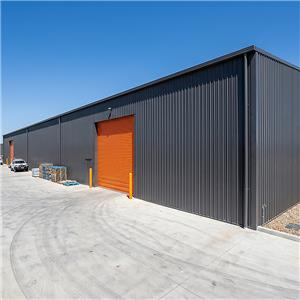
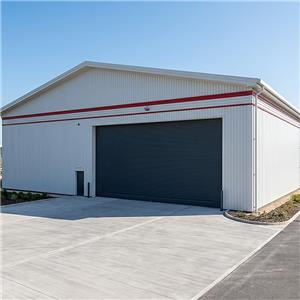
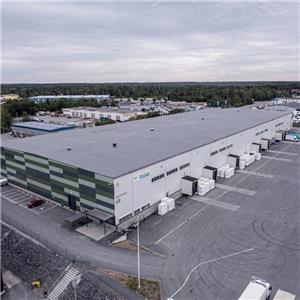

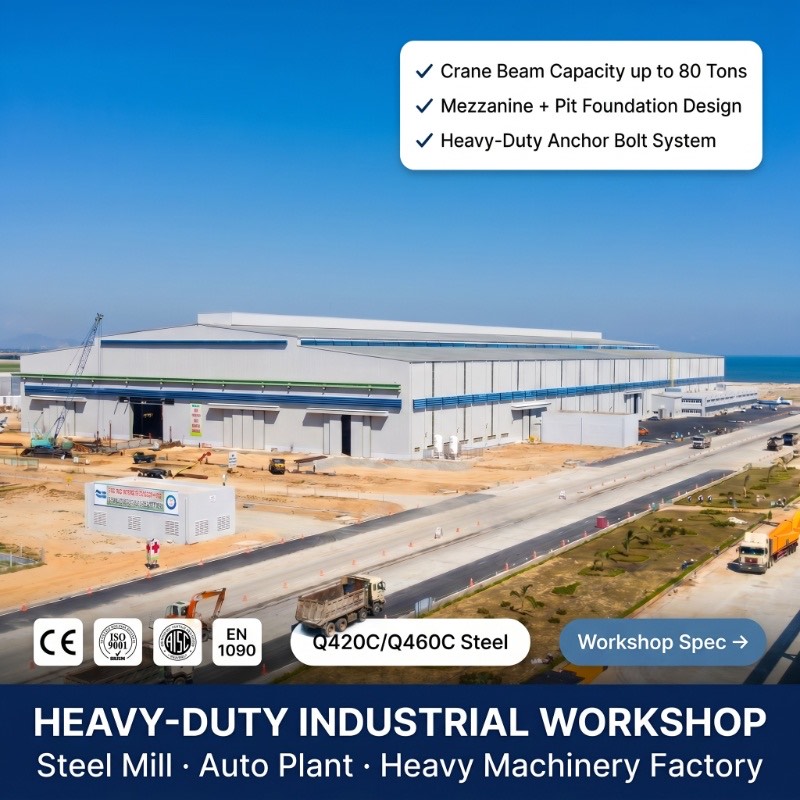
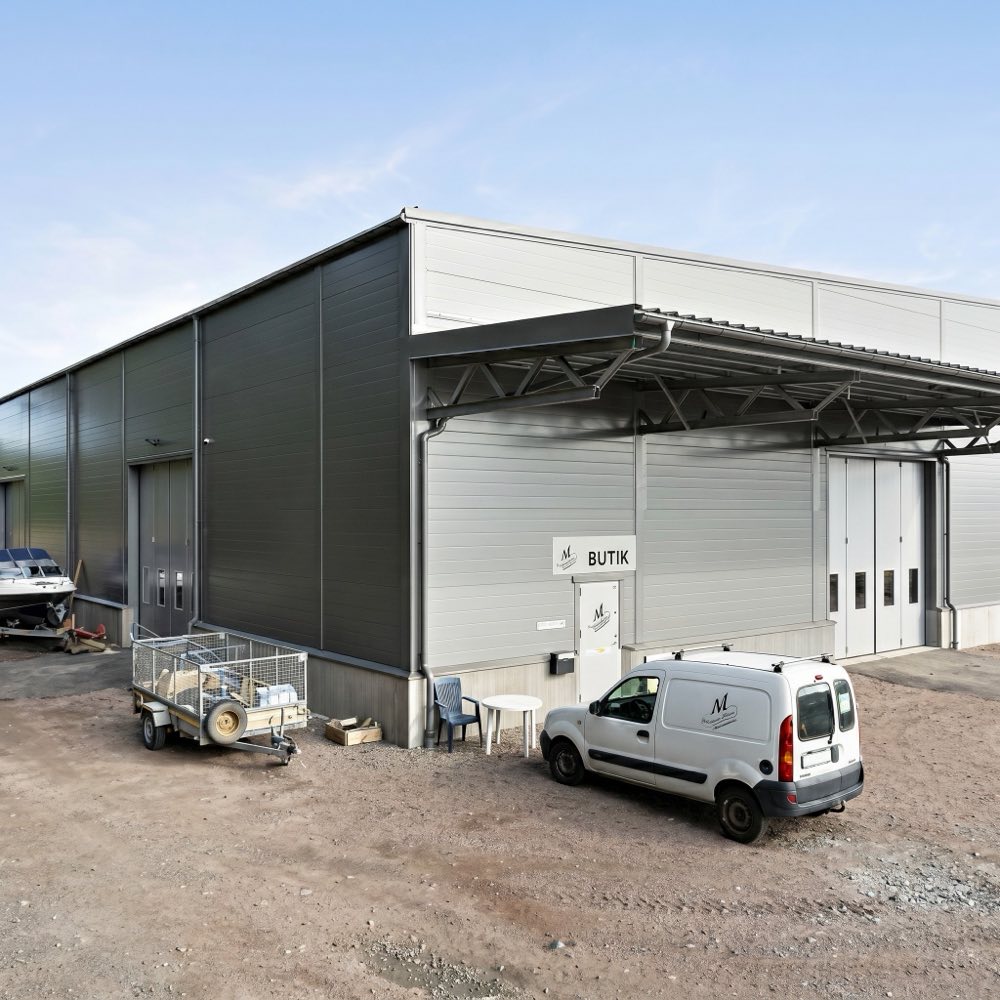
Heavy Machinery Assembly Plant
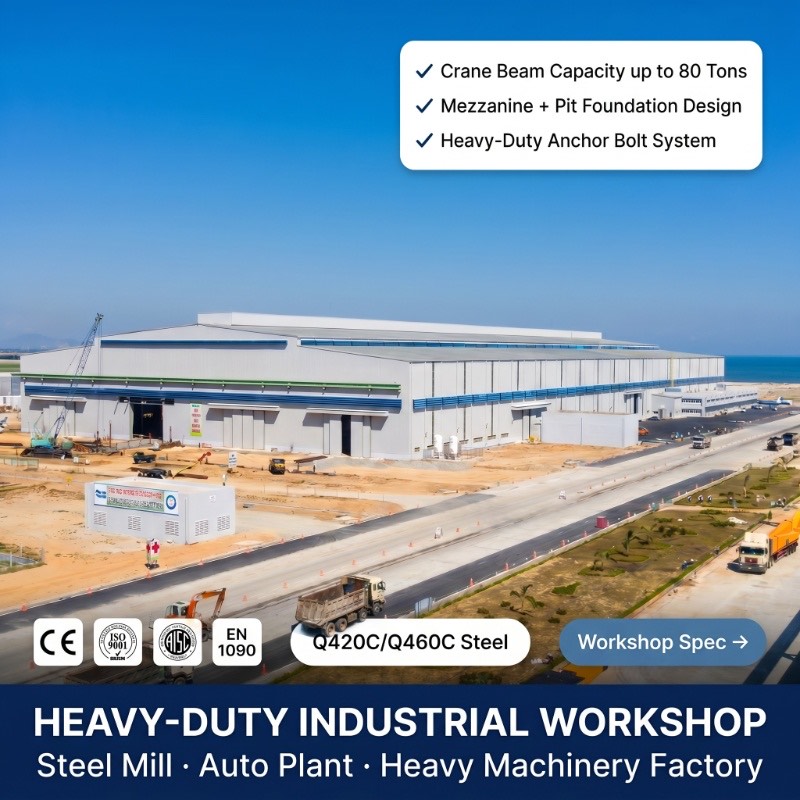
Engineered for 50-ton overhead cranes with tapered welded H-sections and high-strength pre-tensioned joints. Deflection limits of L/600 ensure crane rail precision. Cross-bracing patterns shift natural frequency away from operating RPM for vibration control.
Heavy Machinery Assembly Plant — Vibration Resistant Steel Structure Solutions
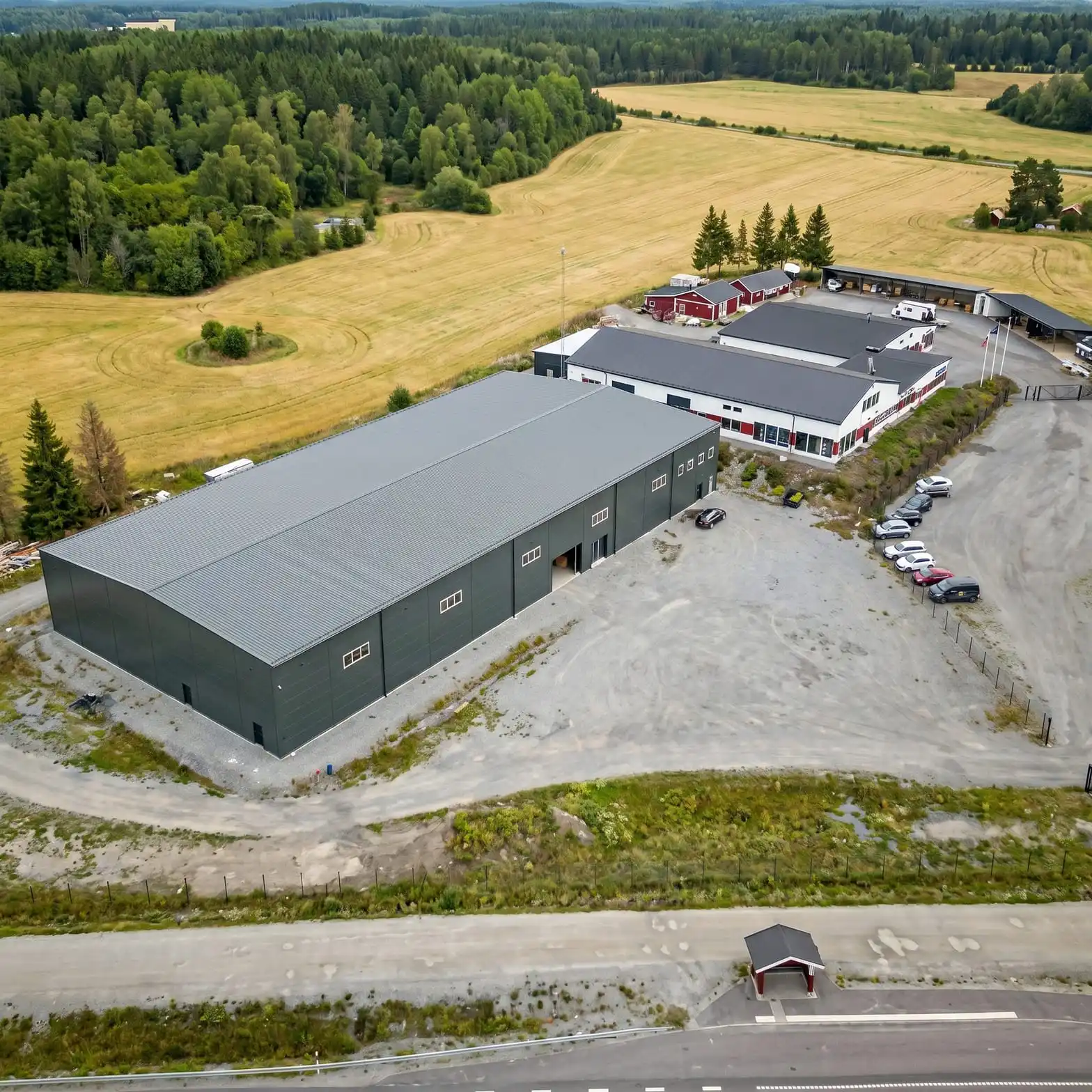
Most facility owners focus on the vertical load of their structure, but when you are operating a Heavy Machinery Assembly Plant, the dynamic horizontal forces are the real design challenge. Whether you are housing 50-ton overhead cranes or high-speed stamping presses, your Vibration Resistant Steel Structure must account for fatigue stress that standard warehouses simply aren't built for. A Heavy Machinery Assembly Plant from Meituo is engineered for stiffness, not just strength. We've seen too many High Tonnage Crane Building projects stall because the rafters were too flexible, leading to crane-rail misalignment and expensive maintenance. By specifying a Industrial Precision Assembly Hall chassis, you are investing in a Reinforced Rafter Production Site that maintains its dimensional precision over a 50-year service life.
The Engineering Science Behind a Vibration Resistant Steel Structure
Why do we emphasize the damping ratio and resonant frequency? Because in a Heavy Machinery Assembly Plant, a rafter that vibrates excessively will eventually crack its own weld-seams. Our Vibration Resistant Steel Structure designs utilize cross-bracing and flange-bracing patterns that shift the natural frequency of the building away from your machinery's operating RPM. This level of Industrial Precision Assembly Hall rigor ensures that your sensitive CNC equipment remains calibrated while the High Tonnage Crane Building is at peak utilization. For a 4,000 m² Reinforced Rafter Production Site, this damping capability significantly reduces long-term maintenance costs for the crane runways and the main frame connections.
| High-Load Metric | Standard Warehouse | Vibration Resistant Steel Structure | Operational Gain |
|---|---|---|---|
| Crane Capacity | Max 5 Ton | Up to 50 Ton Integrated | Enables heavy module assembly in a Heavy Machinery Assembly Plant |
| Deflection Limit | L/180 (Vertical) | L/600 or Better (Dynamic) | Ensures smooth travel for your High Tonnage Crane Building |
| Primary Member | Hot-Rolled I-Beam | Tapered Welded H-Section | Optimized stiffness-to-weight for Reinforced Rafter Production Site |
| Joint Standard | Standard Bolt Pattern | High-Strength Pre-Tensioned | Eliminates joint-slip in a Industrial Precision Assembly Hall |
| Vibration Control | Natural Damping | Engineered Bracing Nodes | Protects precision tools in your Heavy Machinery Assembly Plant |
Why a High Tonnage Crane Building Needs Reinforced Rafters

A High Tonnage Crane Building is a dynamic machine. When a crane starts or stops with a full load, the horizontal surge can be massive. We don't just 'make the columns thicker'. A High Tonnage Crane Building from Meituo uses Reinforced Rafter Production Site principles where the crane brackets are integrated into the rafter haunch design. This ensures that the moment-connections at the column top are transfer-verified before we fabricate a single plate. This is the Industrial Precision Assembly Hall expertise that prevents the 'crane-clatter' often found in cheaper sheds. If you're building a Heavy Machinery Assembly Plant, you need the rafter reserve that only an engineered Vibration Resistant Steel Structure provides.
As a Custom Metal Building Manufacturer, we utilize shop-floor automation to ensure that every High Tonnage Crane Building component meets ±1mm tolerances. This precision is critical for Reinforced Rafter Production Site assembly. If your column base plates are even 5mm out of alignment, the crane runway won't be straight, and your wheels will wear out in months. Our Heavy Machinery Assembly Plant kits eliminate this risk through trial pre-assembly of the main rigid frames.
Maintaining a Industrial Precision Assembly Hall Standard
Operational uptime is the primary KPI for any Heavy Machinery Assembly Plant. A Industrial Precision Assembly Hall built with Vibration Resistant Steel Structure technology should require minimal structural inspection. We specify Sa 2.5 blast cleaning and a high-solid epoxy coating system to ensure the Reinforced Rafter Production Site rafters remain corrosion-free. This ensures that your High Tonnage Crane Building investment holds its resale value in a competitive industrial real estate market.
Frequently Asked Questions on Heavy Industrial Hubs
Q1: Can your Heavy Machinery Assembly Plant handle dual-trolley cranes?
Yes. Our Vibration Resistant Steel Structure analysis covers both single and multi-trolley load cases, including the worst-case simultaneous surge from two trolleys. We ensure the High Tonnage Crane Building rafters handle the combined bending moment without exceeding deflection limits.
Q2: How do you handle vibrations from ground-level stamping presses?
This requires coordination between the Industrial Precision Assembly Hall frame and the floor slab. We provide isolated footing designs that decouple the heavy machinery foundation from the Reinforced Rafter Production Site columns, preventing vibration transmission through the main structure.
Q3: What is the lead time for a High Tonnage Crane Building?
A typical 3,000 m² Heavy Machinery Assembly Plant takes roughly 45–60 days for fabrication. The Vibration Resistant Steel Structure engineering phase adds about 10 days to the timeline but saves weeks in on-site erection by ensuring a perfect fit-up.
Next Step: Request Your Heavy Machinery Assembly Plant Load-Study
Provide your maximum crane lifting capacity and equipment dimensions. Our team will return a Vibration Resistant Steel Structure concept, a High Tonnage Crane Building bay layout, and a Reinforced Rafter Production Site financial summary within 48 hours. Build a Heavy Machinery Assembly Plant that is as precise as your production line.