
The Real Cost of Getting Steel Building Insulation Wrong
The Real Cost of Getting Steel Building Insulation Wrong
Let me tell you about a phone call I got about two years ago. A client in Accra — running a food distribution warehouse, 18 meters wide, single span — had just survived his first full dry season in the building. His words were something like: "The guys inside quit. All three of them. In the same week."
The building had no steel building insulation at all — zero. Peak afternoon temperatures inside were hitting 51°C. He'd saved roughly USD 8,400 by not specifying steel building insulation on the original order. The replacement staff training and recruitment he'd done by the time he called us cost him more than that. And that's before factoring in the spoiled stock.
I'm not trying to guilt-trip anyone. I'm saying: the numbers are real, and they don't always show up in the line items on the original quote.
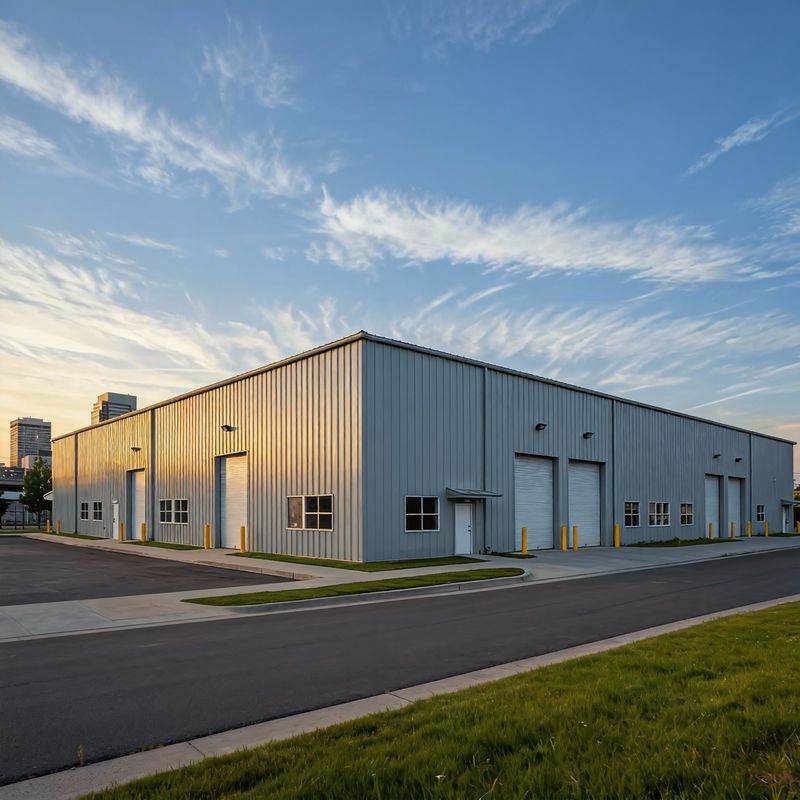
PU sandwich panels being installed on a warehouse roof — the most effective steel building insulation solution for climates above 30°C average summer temperature.
What "No Insulation" Actually Costs in Tropical Climates
An uninsulated steel roof on a clear day in West Africa or the Middle East — with solar irradiance hitting around 950 W/m² at midday — will see panel surface temperatures of 68 to 74°C. That's the outer face. The inner face, depending on roof pitch and air movement, sits somewhere in the low-to-mid 60s.
That surface radiates heat downward into the building. The air in direct contact with the inner face heats up. The heated air rises, hits the ridge, has nowhere to go (in a sealed building), and the internal temperature climbs. By 2pm on a clear day in July in Riyadh or Lagos, you're not cooling a building — you're trying to fight a furnace from the inside.
Worker productivity drops measurably above 28°C. Most occupational health guidelines for physical work set a caution threshold around 30 to 32°C. Above 35°C, workers slow down significantly and need extended rest breaks. Above 40°C, most jurisdictions would classify the working conditions as unsafe.
So the cost calculation isn't just "insulation cost vs. cooling cost." It includes productivity loss, staff turnover, potential regulatory exposure, and — in facilities storing temperature-sensitive goods — product spoilage. The warehouse insulation cost usually looks different once you add those to the comparison.
The Part Most Suppliers Won't Tell You About Sandwich Panels
Sandwich panels aren't all the same. And the difference between a well-specified panel and a cheaply spec'd one isn't always obvious until you're 18 months into operation.
Here's what matters most in a sandwich panel roof system: the density of the insulation core, not just the thickness. A 75mm PU panel from a quality manufacturer has a core density of around 38 to 42 kg/m³. A cheaper panel at the same nominal thickness might have a core density of 28 to 32 kg/m³. The denser core has better thermal resistance — the R-value difference between those two density ranges at 75mm is not trivial. It's around 15 to 20% lower thermal resistance in the cheaper panel.
You won't see that on the quote. The quote says "75mm PU sandwich panel" for both. The specification that distinguishes them — core density — is buried in the technical data sheet, if it's provided at all.
We always specify minimum core density in our supply contracts. Not everyone does. If your supplier doesn't mention core density, ask. If they can't answer, that tells you something.
Steel Building Insulation — Blanket vs Panel: When Each Works
Steel building insulation using blanket — glasswool or rockwool laid over purlins before the outer sheet goes on — gets a bad reputation that's partly deserved and partly not.
For temperate climates? Blanket works fine. The thermal bridge at each purlin is real but manageable when the temperature differential between inside and outside is moderate. In northern Europe, the UK, much of temperate South America — blanket insulation with a properly installed vapor barrier delivers acceptable thermal performance at a cost that's hard to argue with.
For tropical or near-desert climates? The thermal bridging problem becomes significant. Every purlin is a conduction path. At a temperature differential of 35 to 40°C between interior and exterior, those bridges matter. The effective thermal resistance of a blanket system in a tropical climate is typically 60 to 70% of its laboratory-rated value, because of purlin bridging. In a sandwich panel, the core is continuous — no bridging, effective performance close to rated.
If the building needing steel building insulation sits in a climate with more than 5 months per year above 32°C ambient temperature, I'd recommend against blanket for the roof. The premium for sandwich panels over blanket insulation typically runs USD 8 to 14 per square meter of roof area.
On a 3,000 m² building, that's USD 24,000 to USD 42,000. In a hot climate where the building runs 6 to 8 months of serious heat, that additional cost pays back in 4 to 6 years through reduced cooling costs and improved worker conditions — sometimes faster.
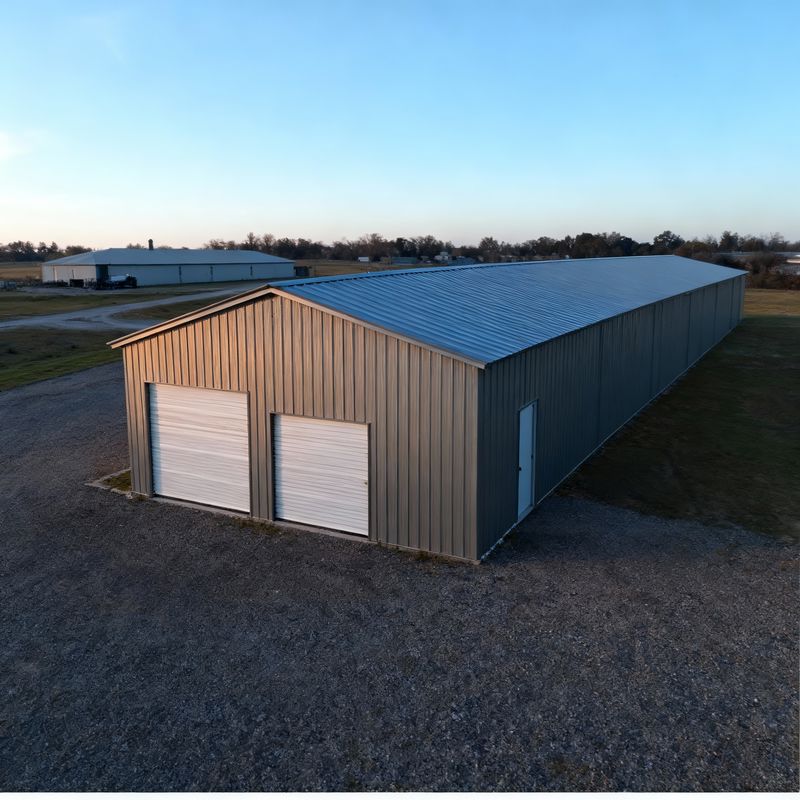
The distinction between metal building insulation types matters most in climates with sustained high temperatures — blanket systems lose significant effectiveness due to thermal bridging at each purlin.
Condensation: The Winter Problem Nobody Mentions When Selling Tropical Buildings
Here's something that surprises buyers from very hot climates: condensation in steel buildings isn't only a cold-climate problem. It happens in the tropics too, just at a different time of day and driven by a different mechanism.
In humid tropical and subtropical regions, the steel roof sheet cools rapidly on clear nights through radiative loss to the sky. By 4 or 5am, the outer face of the sheet can drop 8 to 12°C below ambient air temperature.
The inner face is only slightly warmer. When workers open the building in the morning and warm, humid air enters — or when the sun begins heating the building and temperature stratification starts — the cooler inner face of the roof sheet can be below the dew point of the entering air.
Result: dripping from the ceiling. Onto stock, machinery, electrical equipment, finished goods. It doesn't last long — by 9am the sheet has warmed up and the dripping stops. But in a facility storing electronics, food products, or anything moisture-sensitive, a few hours of ceiling drip three or four days a week during certain seasons is not a minor inconvenience.
Proper building thermal insulation keeps the inner face of the roof above dew point. The insulation layer — whether blanket or panel — prevents the overnight radiative cooling from reaching the interior face of the cladding. The condensation problem disappears. Not reduced. Gone.
A Simple Calculation Worth Doing Before You Finalize the Spec
Take the floor area of the building. Multiply by the difference in warehouse insulation cost per square meter between your current spec and a better one. That's your upgrade cost.
Now estimate the monthly electricity cost of running cooling equipment in an uninsulated versus insulated building. In most markets, adequate mechanical cooling for a 3,000 m² uninsulated tropical warehouse runs 35 to 55 kW of installed capacity continuously during peak season. With insulation, that drops to 18 to 28 kW for the same interior conditions.
At USD 0.12 per kWh running 12 hours a day, 6 months a year, the saving is somewhere around USD 14,000 to USD 20,000 annually. The steel building insulation upgrade cost on a 3,000 m² building — blanket to sandwich panel — is typically USD 24,000 to USD 42,000. The payback is 1.5 to 3 years.
That's a rough calculation and your numbers will differ. But the order of magnitude is consistent across most markets and energy tariff structures I've seen. Do the steel building insulation cost calculation for your specific project. The result usually makes the decision obvious. Explore the Steel Structure Warehouse range to see insulation specifications by climate zone.
Two Questions I Get Asked All the Time
Can I add insulation to an existing steel building?
Yes, but it's more expensive and less effective than getting it right the first time. Retrofit steel building insulation options include spray foam applied to the inner face of existing roof sheets, interior liner panels clipped below the existing purlins, and blanket insulation draped from the purlin flange and held by a liner sheet.
All of these work to some degree. None of them perform as well as factory-bonded sandwich panel roof system installed correctly on a new building. And all of them are more expensive per unit of thermal improvement than specifying the sandwich panel originally.
What's the minimum steel building insulation that actually makes a difference in a hot climate?
Honestly, any steel building insulation helps compared to nothing. A 50mm glasswool blanket on the roof with a foil facing reduces solar heat gain measurably. The practical threshold for "makes a real operational difference" in climates above 35°C average summer peak is 75mm sandwich panel on the roof — either PU or rockwool depending on whether fire rating is a concern. Below that threshold, you're spending money on building thermal insulation that the occupants probably won't feel.
What We'd Recommend
If the building is in a climate where summer peaks regularly exceed 35°C, specify 75mm PU or rockwool sandwich panels — adequate steel building insulation for the roof as a minimum. Add ridge ventilation. Size the ridge opening correctly — 1 m² of ridge opening per 60 to 75 m² of floor area is the standard rule of thumb. If you're using any mechanical cooling at all, add wall insulation too — 50mm sandwich panels on the walls make a meaningful difference to the cooling load.
If budget is a hard constraint, do the roof first. The roof is where most of the solar gain enters. Wall steel building insulation is secondary. No steel building insulation at all should only be an option in climates where it genuinely isn't needed — above about 40° latitude in both hemispheres, where summers are short and mild.
Contact the Meituo Buildings team with your project location and building dimensions. We'll tell you what we'd specify for that specific climate and why — without trying to sell you more insulation than you actually need.
Email: sales@meituobuildings.com
WhatsApp: +86 15910306877
Website: www.meituobuildings.com